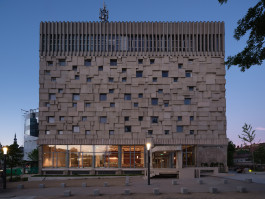
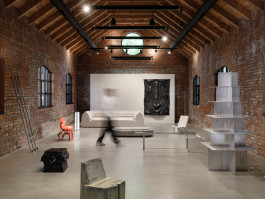
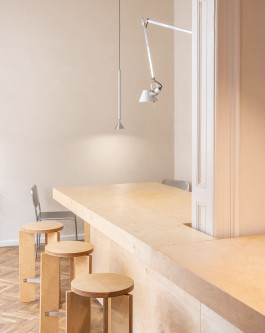
Aesthetics for a new contemporary design gallery located in Bucharest, Romania. In collaboration with Intro, we have transformed their existing showroom space into a fluid and radical landscape to showcase iconic design.
We aimed to create a seamless connection between the exhibited objects and the visitors at Intro gallery, enhancing the exhibits without overshadowing them. From the start, we felt the need to move away from the homey feel of the rooms geometry, soften the sharp edges of the walls, doorways, and recesses, and find a way to integrate with the space's four stoves.
Thus, we intervened to streamline the flow and readability of the space by introducing a skeletal framework that mirrors the house's walls, naturally guiding visitors from the entrance hall to each exhibition area and completely transforming the space.
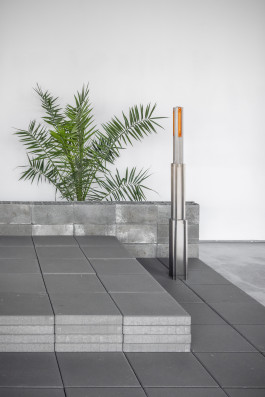
Our material choices diverged radically from conventional interior finishes, highlighting typically concealed elements like metal profiles, thermal insulation, and sealing materials. This approach allowed us to easily execute the proposed geometry, create a contrasting backdrop that complements the exhibited objects, and generate intriguing visual effects with the walls reflective surfaces. This sensory journey also helped us maintain precise control over the details.
Photos by Vlad Patru


Aesthetics for a new contemporary design gallery located in Bucharest, Romania. In collaboration with Intro, we have transformed their existing showroom space into a fluid and radical landscape to showcase iconic design.
We aimed to create a seamless connection between the exhibited objects and the visitors at Intro gallery, enhancing the exhibits without overshadowing them. From the start, we felt the need to move away from the homey feel of the rooms geometry, soften the sharp edges of the walls, doorways, and recesses, and find a way to integrate with the space's four stoves.
Thus, we intervened to streamline the flow and readability of the space by introducing a skeletal framework that mirrors the house's walls, naturally guiding visitors from the entrance hall to each exhibition area and completely transforming the space.
Our material choices diverged radically from conventional interior finishes, highlighting typically concealed elements like metal profiles, thermal insulation, and sealing materials. This approach allowed us to easily execute the proposed geometry, create a contrasting backdrop that complements the exhibited objects, and generate intriguing visual effects with the walls reflective surfaces. This sensory journey also helped us maintain precise control over the details.
Photos by Vlad Patru